
Emigrantas: Meaning, Journey, Challenges, and Global Impact
Introduction
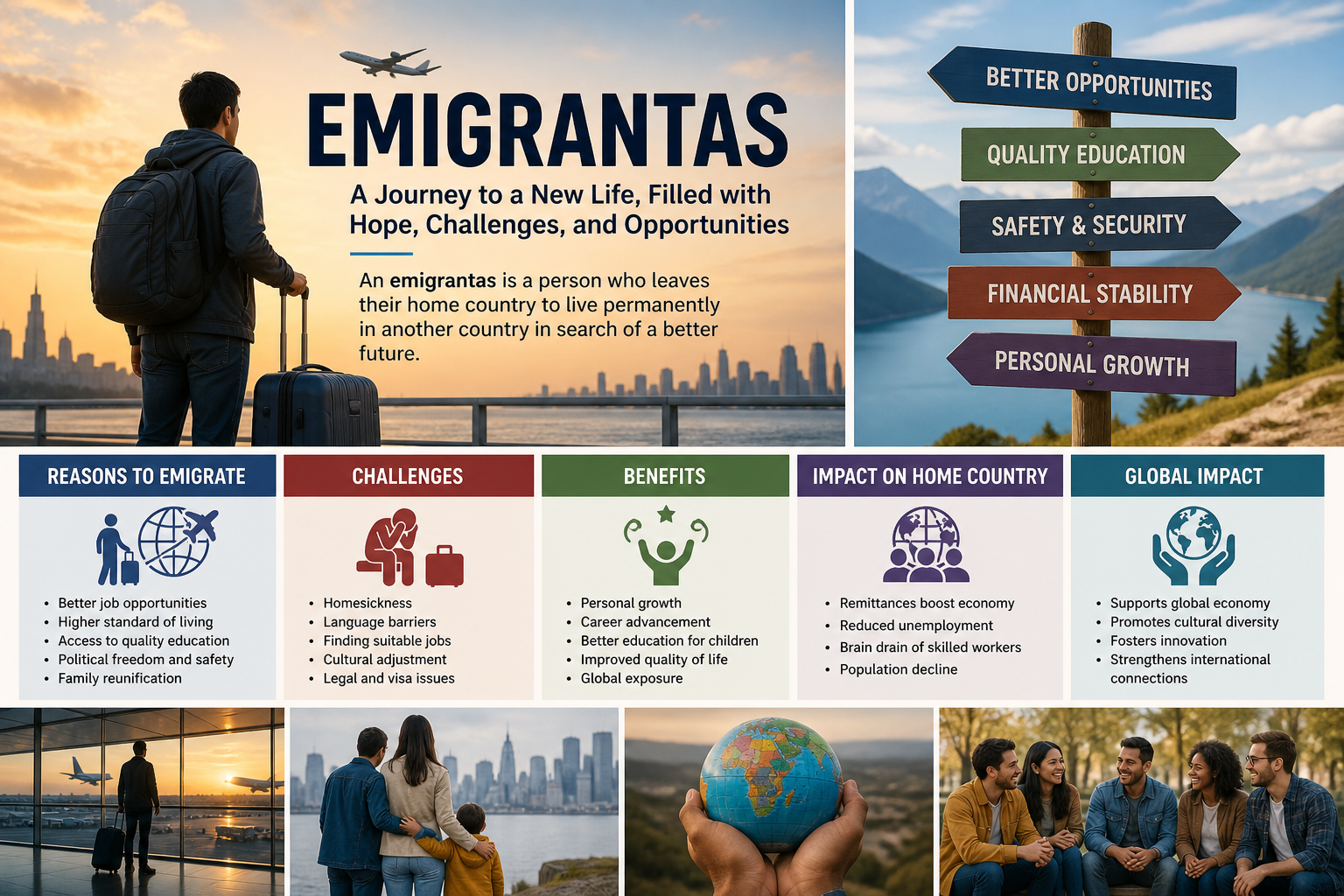
The word emigrantas carries far more weight than its simple definition suggests. At its core, an emigrantas is a person who leaves their native country to live permanently in another. Yet behind this single term lies a deeply personal journey—one shaped by ambition, sacrifice, uncertainty, and resilience.
In today’s interconnected world, the experience of being an emigrantas is more common than ever. People relocate across borders for better opportunities, safety, education, or simply a new way of life. But while the reasons may differ, the emotional and practical realities often share common threads.
This in-depth article explores the full meaning of emigrantas, the reasons behind emigration, the challenges faced, and the lasting impact on individuals and societies.
What Does Emigrantas Mean?
An emigrantas is someone who leaves their home country with the intention of settling in another country permanently. The focus of the term is on departure—the act of leaving one’s homeland.
This distinction is important. The same person who is an emigrantas from their country of origin becomes an immigrant in the country they move to. The perspective shifts, but the person remains the same.
The concept emphasizes a long-term or permanent move, rather than temporary travel or short-term migration.
The Historical Roots of Emigrantas
Early Human Movement
The idea of emigrantas is as old as human civilization. Early humans migrated in search of food, safety, and better living conditions. These movements laid the foundation for modern societies.
Mass Emigration in the 19th and 20th Centuries
One of the most significant periods of emigration occurred during the 19th century, when millions of Europeans left their countries for the Americas. Poverty, famine, and lack of opportunity drove these migrations.
Similarly, political upheavals and wars in the 20th century forced millions to leave their homes, creating large emigrant populations worldwide.
Modern Emigration Trends
Today, emigration is driven by a mix of traditional and modern factors:
- Global job markets
- Access to international education
- Political instability in some regions
- Climate-related displacement
The modern emigrantas is often more mobile, informed, and connected than ever before.
Why Do People Become Emigrantas?
The decision to become an emigrantas is rarely simple. It is usually influenced by a combination of “push” and “pull” factors.
Push Factors
Push factors are the conditions that drive individuals away from their home country:
- Limited job opportunities
- Economic instability
- Political conflict or lack of freedom
- Poor healthcare or education systems
- Environmental challenges
Pull Factors
Pull factors attract individuals to a new country:
- Better career prospects
- Higher standard of living
- Access to quality education
- Political stability and safety
- Family reunification
Often, the decision to emigrate is not based on a single reason but a combination of these factors.
Types of Emigrantas
Not all emigrants share the same motivations or experiences. The term emigrantas can describe several distinct categories.
Economic Emigrantas
These individuals move primarily for employment and financial improvement. They often seek higher wages and better career opportunities.
Political Emigrantas
People who leave due to political instability, lack of rights, or government oppression fall into this category.
Educational Emigrantas
Students who move abroad for higher education and later choose to stay permanently.
Refugees and Forced Emigrantas
These emigrants are forced to leave due to war, persecution, or threats to their safety.
Lifestyle Emigrantas
Some individuals emigrate to improve their quality of life, such as retirees moving to countries with lower living costs or better climates.
Each type reflects different motivations but shares the same core experience of leaving one’s homeland.
The Emotional Journey of an Emigrantas
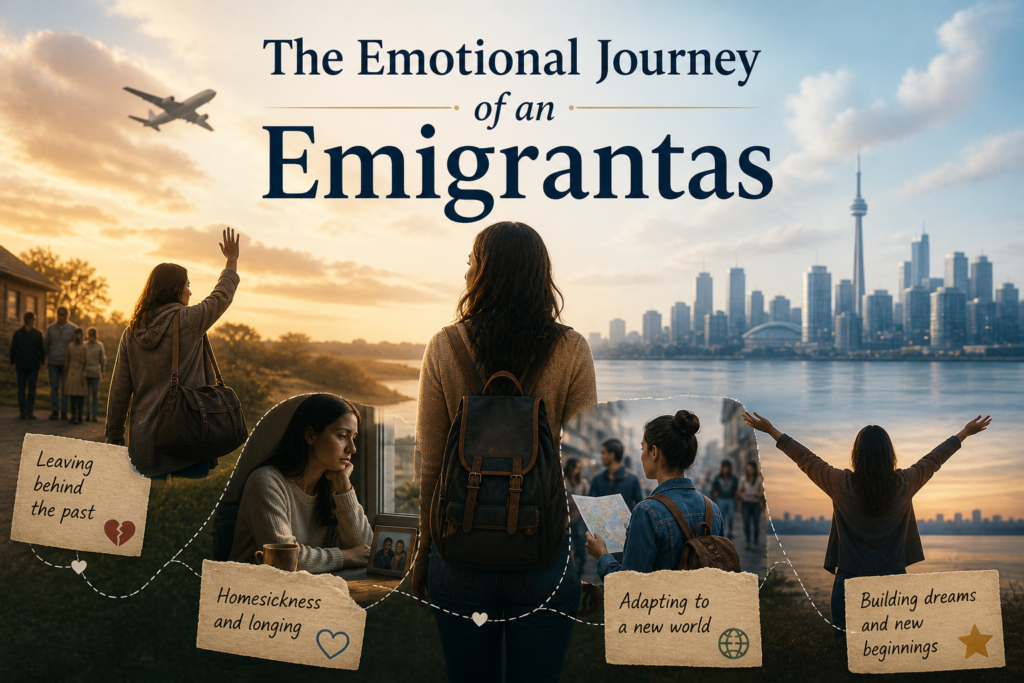
Becoming an emigrantas is not just a physical move—it is an emotional transformation.
Leaving Home
The initial decision to leave often involves difficult choices:
- Saying goodbye to family and friends
- Leaving behind familiar environments
- Facing uncertainty about the future
Culture Shock
Adjusting to a new country can be overwhelming:
- Language barriers
- Different social norms
- New work environments
This phase can be both exciting and challenging.
Identity and Belonging
Many emigrants struggle with identity:
- Feeling connected to their home country
- Trying to integrate into a new culture
This dual identity can create a sense of being “in between” two worlds.
Homesickness
Even after settling, many emigrants experience:
- Longing for home
- Missing cultural traditions
- Emotional distance from loved ones
These feelings are natural and often persist over time.
Challenges Faced by Emigrantas
While emigration offers opportunities, it also comes with significant challenges.
Legal and Administrative Barriers
- Obtaining visas and work permits
- Navigating immigration laws
- Long paths to citizenship
Employment Difficulties
- Difficulty finding jobs matching qualifications
- Non-recognition of foreign degrees
- Workplace discrimination
Social Integration
- Language barriers
- Cultural misunderstandings
- Building new social networks
Financial Pressure
Starting over in a new country can be expensive:
- Housing costs
- Education expenses
- Supporting family back home
These challenges require resilience and adaptability.
Benefits of Being an Emigrantas
Despite the obstacles, many people choose to emigrate for the benefits it offers.
Career Advancement
- Access to global job markets
- Higher salaries
- Professional growth opportunities
Personal Development
- Exposure to new cultures
- Increased independence
- Broader worldview
Improved Living Standards
- Better healthcare systems
- Higher-quality education
- Safer environments
Opportunities for Future Generations
Many emigrants move to provide better opportunities for their children.
Economic Impact of Emigrantas
Impact on the Home Country
Emigration can have mixed effects:
Positive:
- Remittances sent back home
- Reduced unemployment
Negative:
- Loss of skilled workers (brain drain)
- Population decline in certain regions
Impact on the Host Country
Emigrants contribute significantly:
- Filling labor shortages
- Supporting economic growth
- Driving innovation
In many countries, emigrants are essential to key industries such as healthcare, construction, and technology.
Cultural Influence of Emigrantas
Emigrants bring their culture with them, enriching their new environments.
Formation of Diaspora Communities
Emigrants often form communities that:
- Preserve language and traditions
- Celebrate cultural festivals
- Support new arrivals
Cultural Exchange
These communities contribute to:
- Diverse cuisines
- Music and art
- Multicultural societies
The presence of emigrantas helps create more inclusive and dynamic cultures.
Emigrantas in the Modern World
Global Mobility
Advancements in transportation and communication have made emigration easier and more accessible.
Skilled Migration
Countries actively seek skilled emigrants to support their economies.
Digital Transformation
Remote work has changed the nature of emigration:
- People can work for foreign companies without relocating
- Digital nomad lifestyles are becoming more common
Changing Policies
Governments are adapting immigration policies to attract talent and manage migration flows.
FAQ About Emigrantas
What is an emigrantas?
An emigrantas is a person who leaves their home country to live permanently in another country.
What is the difference between emigrantas and immigrant?
An emigrantas focuses on leaving a country, while an immigrant focuses on entering a new one.
Why do people become emigrantas?
People emigrate for better opportunities, safety, education, or improved quality of life.
Is being an emigrantas permanent?
Generally, yes. The term usually implies a long-term or permanent move.
What challenges do emigrantas face?
Common challenges include legal barriers, employment difficulties, cultural adjustment, and homesickness.
Conclusion
The concept of emigrantas represents a powerful and transformative human experience. It is a journey defined by courage, adaptation, and hope for a better future. From historical migrations to modern global mobility, emigrants have shaped societies, economies, and cultures around the world.
Understanding the emigrantas experience requires recognizing both the opportunities and the challenges involved. It is not just about moving from one country to another—it is about building a new life while carrying the memories and identity of the past.
As globalization continues to connect people across borders, the role of the emigrantas will remain central in shaping the future of our world.